
A side-by-side look at hollow blade paddle dryers and vacuum rake dryers to help clarify which agitated drying design fits a given process.
Hollow blade (paddle) dryers and vacuum rake dryers are both indirect, conduction-heated agitated dryers, but their mechanical design and material handling behavior differ in ways that matter when selecting equipment for a specific process.
Hollow Blade (Paddle) Dryers
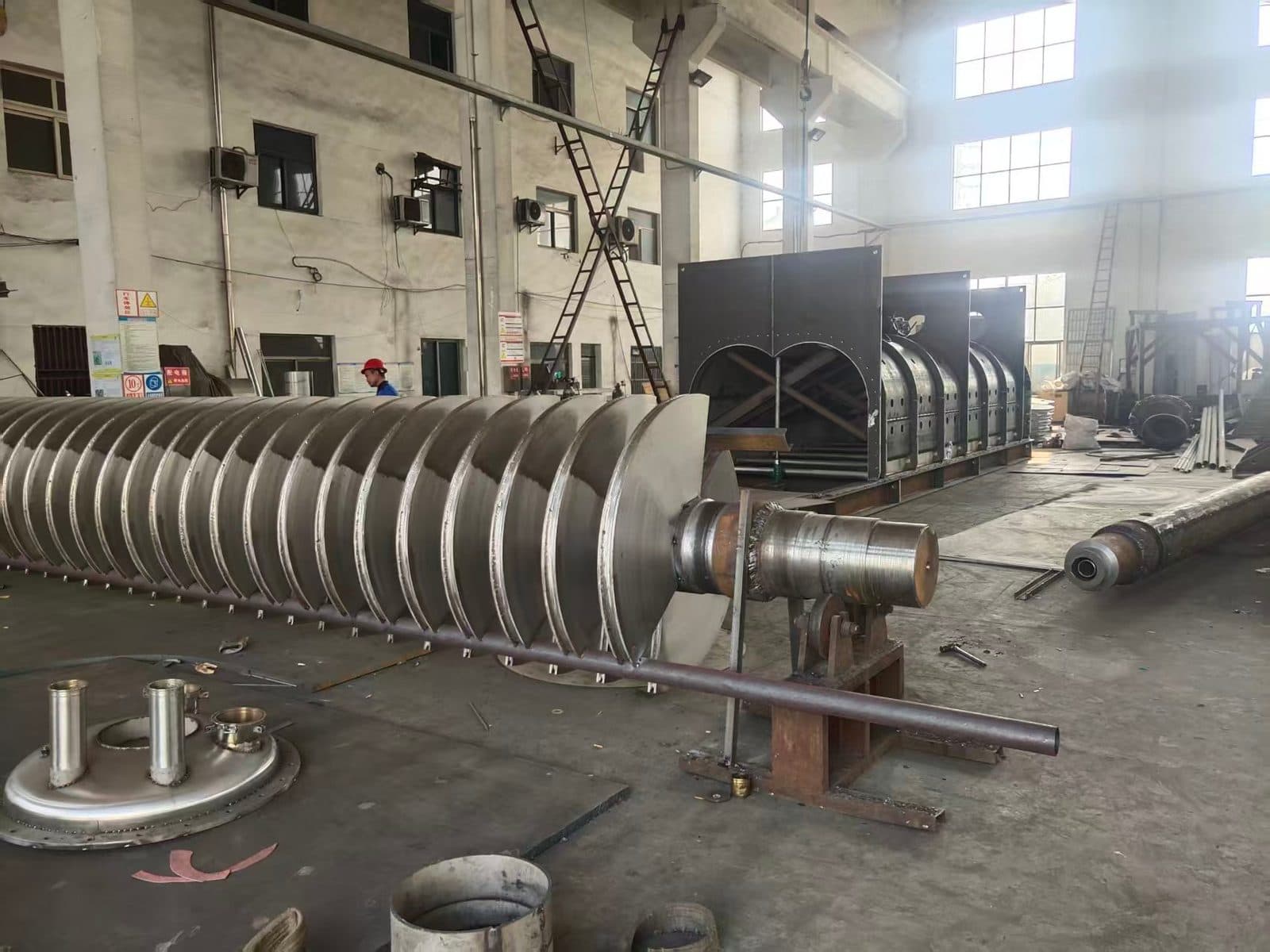
Paddle dryers use densely arranged, wedge-shaped hollow blades mounted on one or more hollow shafts. Heating or cooling medium flows through the blades themselves, giving a very large heat transfer area relative to the equipment footprint. The wedge shape creates a self-cleaning scrubbing action against the vessel wall as the blades rotate, which helps prevent material buildup on heat transfer surfaces. This design is well suited to continuous or semi-continuous operation across a wide range of paste, granular, and powdery materials, including applications like sludge and filter cake drying where high throughput per unit volume matters.
Vacuum Rake Dryers
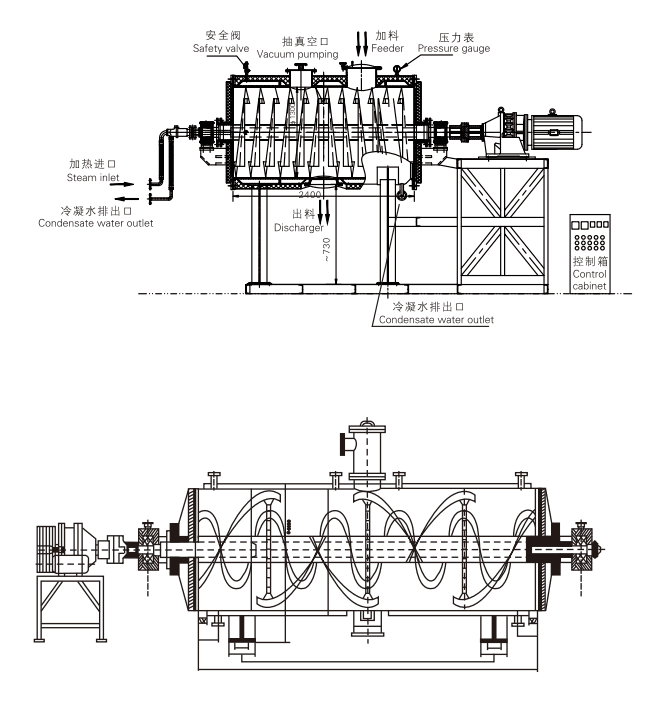
Rake dryers use a central stirrer fitted with scraper blades that continuously clear material from the heated jacket wall of a horizontal cylindrical vessel, forming a circulating flow within the batch. This batch-oriented design is often chosen for pastes and powders that require precise, gentler control over the drying cycle, including materials that must be handled with organic solvent recovery or under low-temperature vacuum conditions.
Making the Choice
In practice, the decision often comes down to batch versus continuous operation requirements, the material heat sensitivity, and whether solvent recovery is part of the process. A short engineering discussion covering feed rate, target moisture content, and material handling characteristics is usually enough to identify which configuration fits best, and in some cases a combination of equipment types across a production line is the right answer.