
How vibrating fluidized bed dryers keep powders and granules moving uniformly through the drying and cooling process.
Fluidized bed drying suspends powder or granular material in a moving stream of hot air, so that each particle is surrounded by air rather than sitting in a static layer. This uniform exposure is what gives fluidized bed systems their reputation for even drying results, avoiding the localized over-drying or under-drying that can occur in tray or oven-based systems.
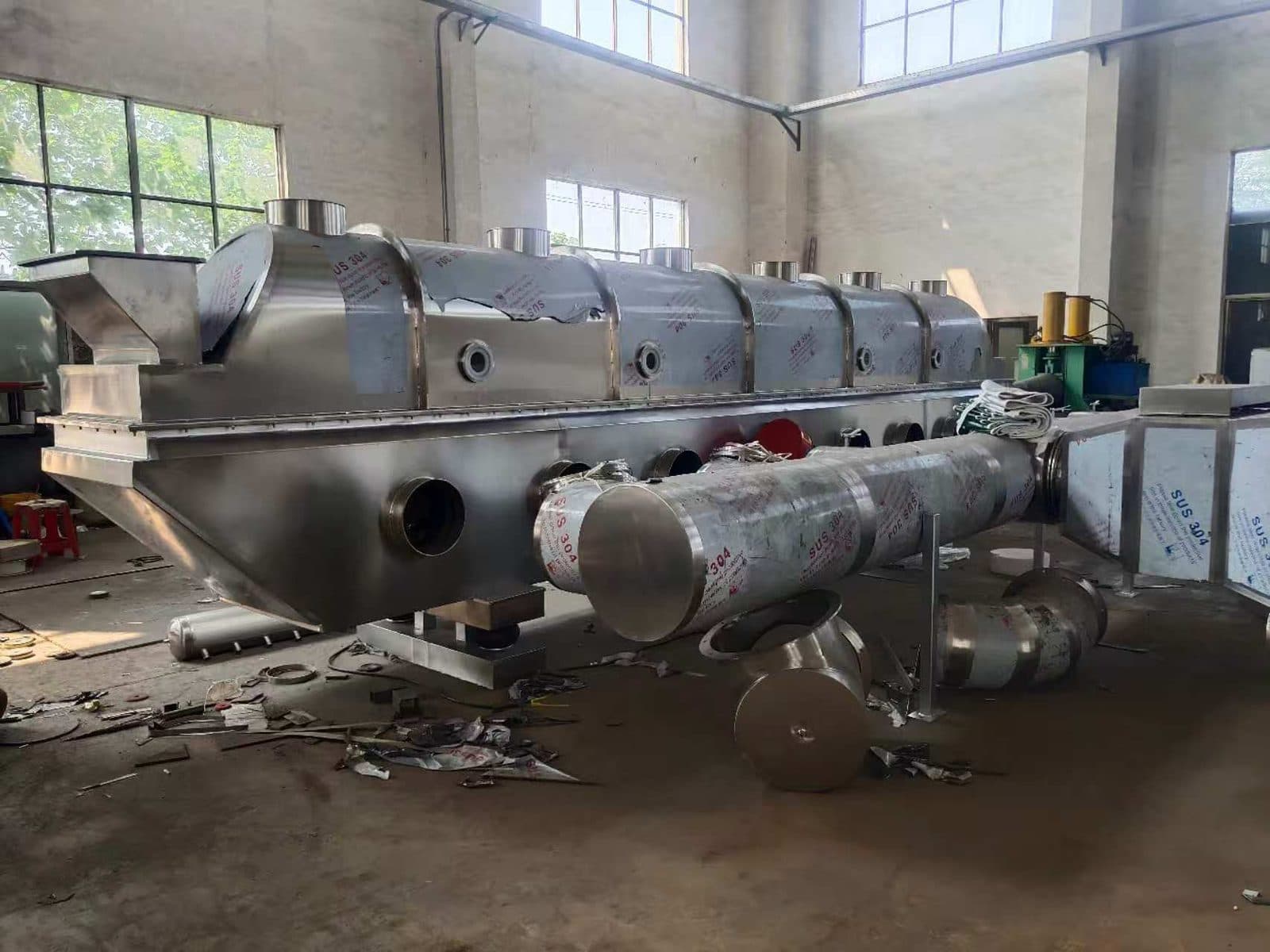
The Role of Vibration
Rectilinear vibrating fluidized bed dryers add a mechanical vibration component to the airflow-driven fluidization. This combination helps convey material along the length of the bed while keeping it fluidized, and it is particularly useful for materials with a wider particle size distribution that might not fluidize as evenly under airflow alone. The vibration source is typically a dedicated vibrating motor mounted to the bed structure.
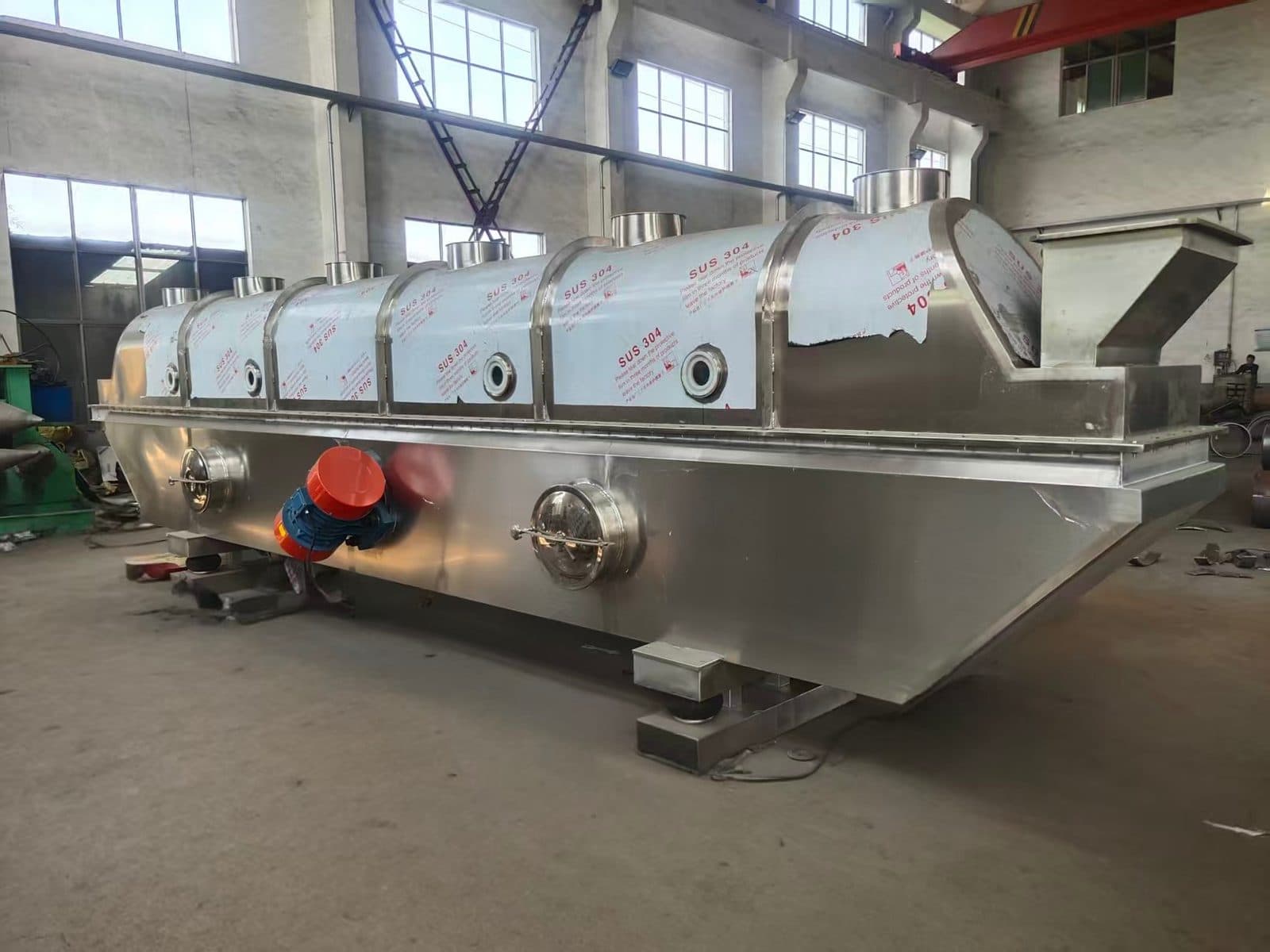
Drying and Cooling in One Pass
A useful characteristic of fluidized bed equipment is the ability to divide the bed into drying and cooling zones within a single pass. Material enters the drying zone, where hot air removes moisture, then continues into a cooling zone where ambient or chilled air brings the product down to a temperature suitable for packaging, without a separate handling step. This is one reason fluidized bed dryers are common in industries such as fertilizer, food ingredient, and chemical powder processing where direct packaging after drying is desirable.