
Applications
Battery Materials
Moisture-sensitive drying for battery material processing, where residual moisture and oxidation control are critical to downstream cell performance.
Discuss Your MaterialRecommended Equipment
Equipment suited to this application
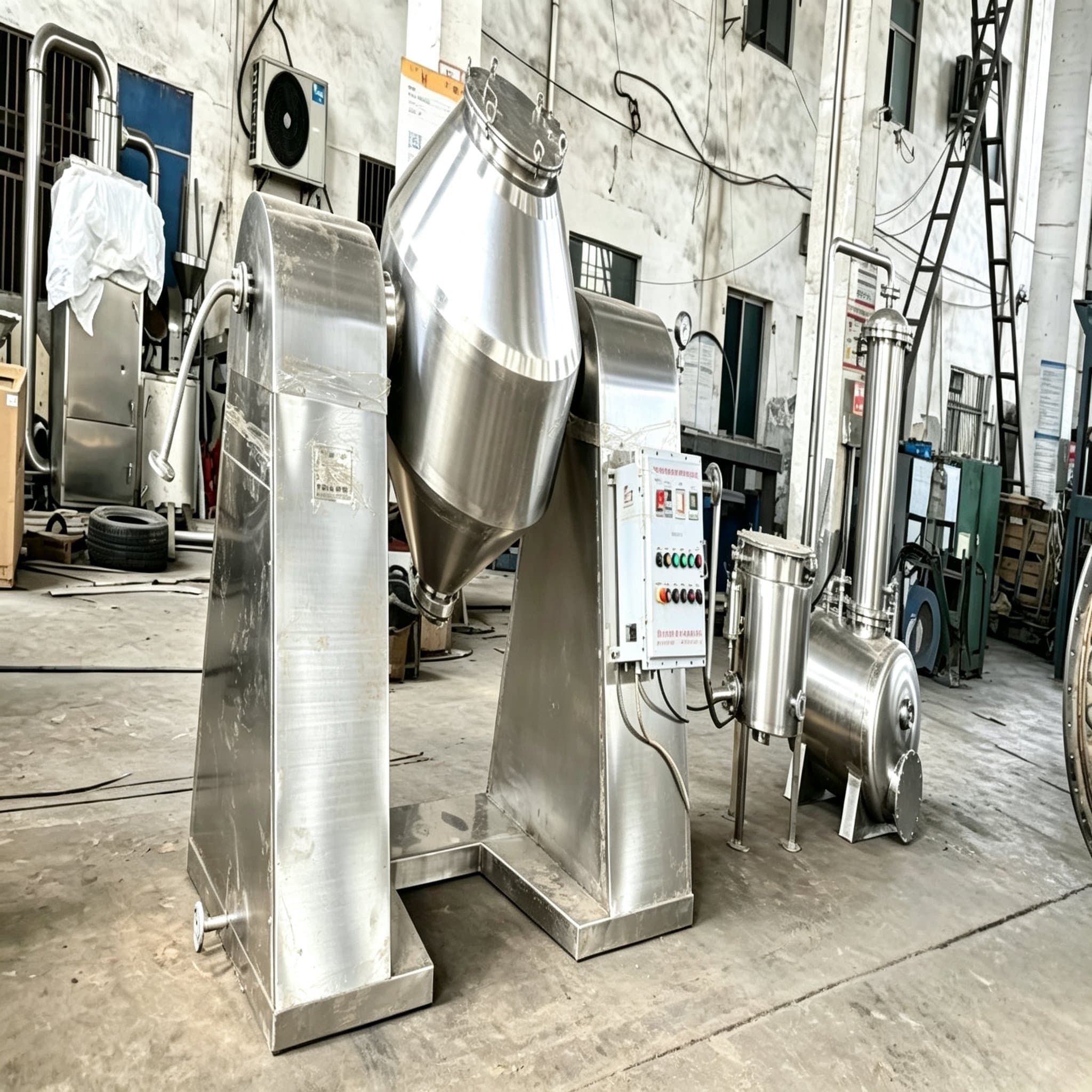 SZG Series
Drying Equipment
SZG Conical Vacuum Dryer
Double-cone rotary vacuum dryer for low-temperature drying of heat-sensitive, oxidation-prone, and solvent-laden materials.
View specifications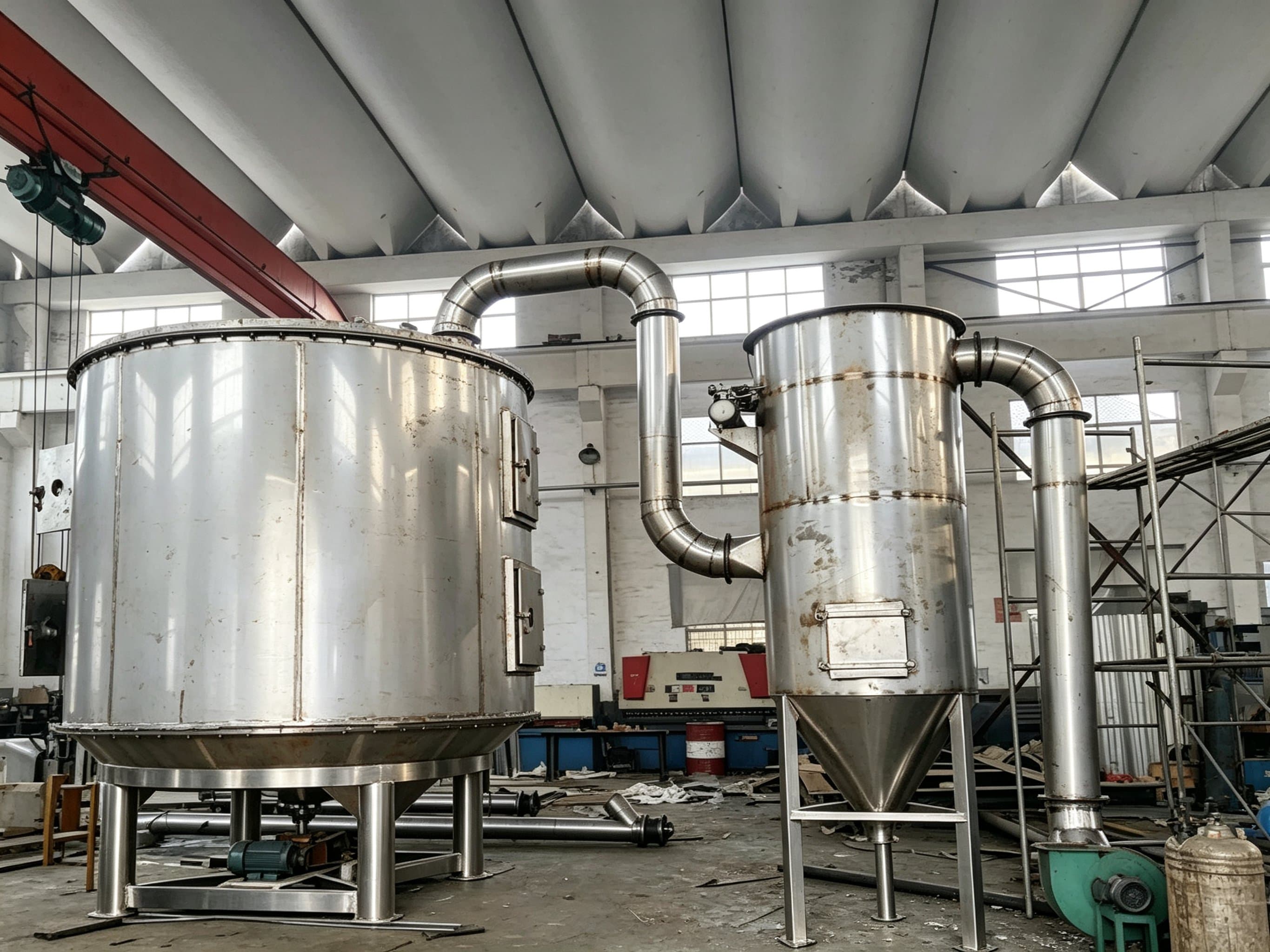 PLG Series
Drying Equipment
PLG Continuous Plate Dryer
Conduction-type continuous multi-plate dryer with atmospheric, closed, and vacuum configurations for large drying areas in a small footprint.
View specifications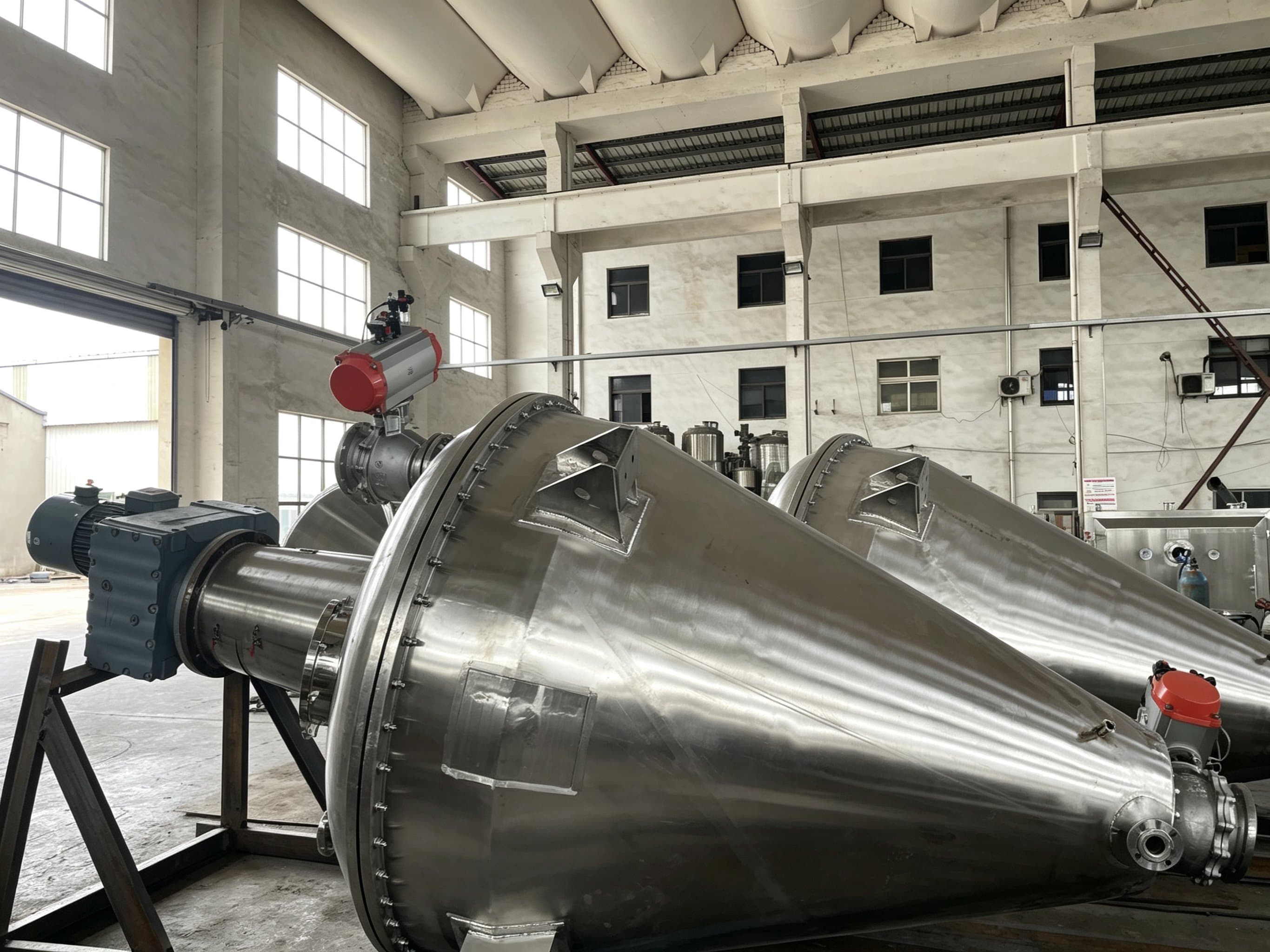 DZG Series
Drying Equipment
DZG Single Cone Vacuum Ribbon Dryer
Vertical vacuum dryer with an internal heated ribbon that combines drying and mixing in a single operation.
View specificationsCase Studies
Related project examples
Pharmaceutical
Low-Temperature Conical Vacuum Drying for a Pharmaceutical Intermediate
A pharmaceutical intermediate producer required a drying process that would not expose the product to temperatures that risked degrading its active content, while still achieving the residual moisture target needed for the next processing step. The customer also required a design compatible with cleaning and inspection procedures common in GMP-oriented environments.
Read case studyChemical
Continuous Plate Drying for a Solvent-Wet Chemical Powder
Granular chemical powder leaves the centrifuge wet with solvent, and the moisture has to come off without pushing the product past its temperature limit. A single-zone tray oven cannot do both jobs. The trays nearest the heat source dry first and keep taking heat while the rest of the batch is still wet, so one batch ends up over-dried and under-dried at the same time. Operators compensate by extending the cycle, which lengthens thermal exposure for the whole batch and raises the solvent load in the exhaust. Solvent recovery adds a second constraint: the drying chamber has to stay closed and the vapour has to leave through one controlled outlet instead of an open door.
Read case study