
How to approach drying for materials that degrade, discolor, or lose activity when exposed to excess heat or oxygen.
Heat-sensitive materials, whether pharmaceutical actives, biochemical intermediates, or certain natural extracts, present a specific engineering challenge: the drying process must remove moisture or solvent thoroughly without exposing the material to conditions that cause thermal degradation, discoloration, loss of potency, or unwanted chemical reactions.
Lower the Temperature, Not the Drying Rate
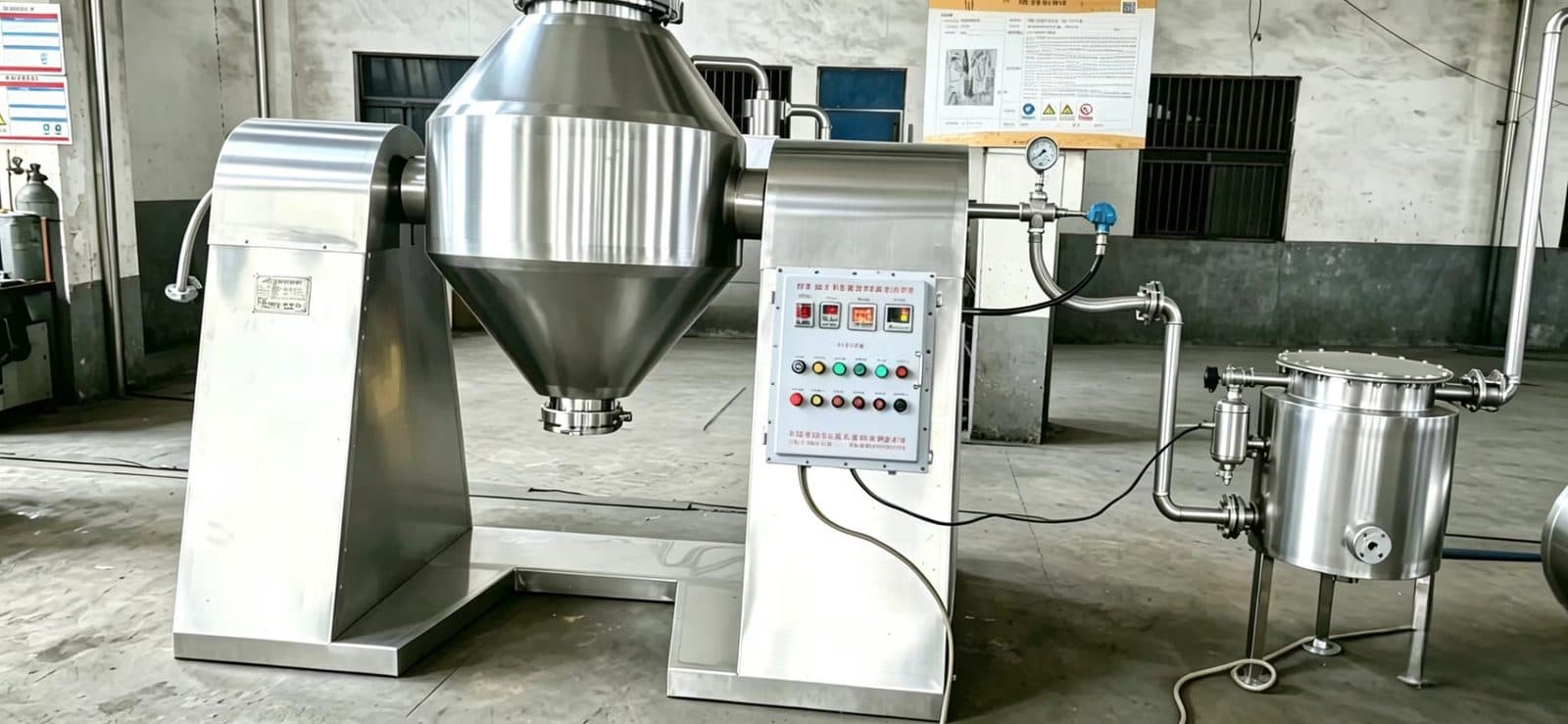
The instinctive approach to protecting a heat-sensitive material is simply to reduce oven temperature, but this often just slows the process without solving the underlying issue. A better approach is to change the drying mechanism itself. Vacuum drying reduces the boiling point of residual moisture, allowing evaporation to occur at a lower absolute temperature while still proceeding efficiently.
Equipment such as conical vacuum dryers and vacuum ribbon dryers are frequently specified for these applications because they combine indirect jacket heating with continuous material movement, which improves heat transfer uniformity without requiring localized hot spots.
Controlling Oxygen Exposure
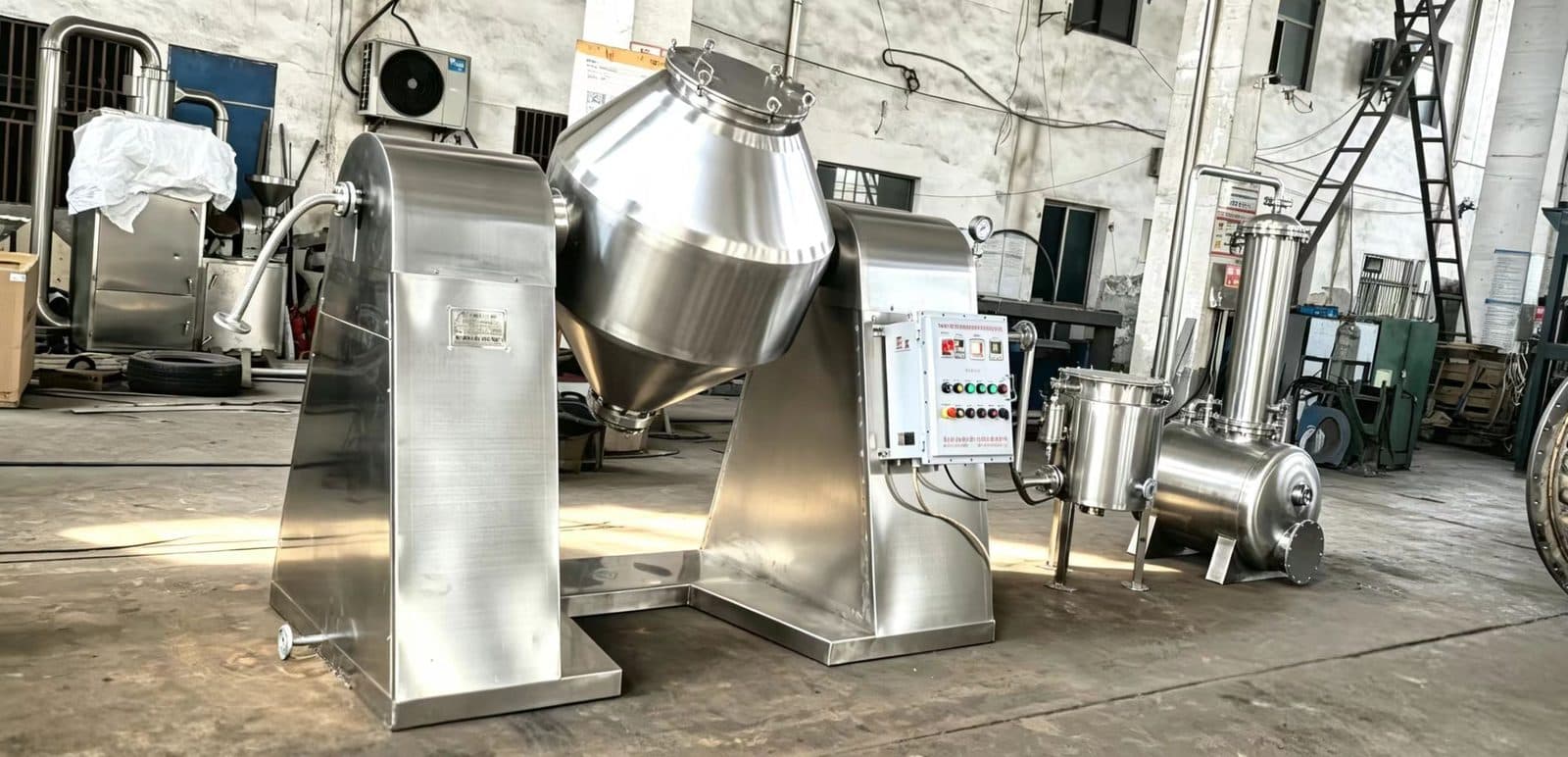
Beyond temperature, oxygen exposure is often the second major degradation pathway. Sealed vacuum systems limit the amount of oxygen present during the drying cycle, which is particularly relevant for easily oxidized chemical and biochemical materials. In some cases, an inert gas purge is combined with vacuum operation for additional protection.
Residence Time and Mechanical Stress
Finally, mechanical agitation intensity and residence time both affect product quality. Overly aggressive stirring can generate localized heat through friction or damage friable particles, while excessive residence time increases cumulative thermal exposure even at a low set-point temperature. Matching agitator design, rotation speed, and batch duration to the specific material is part of a proper equipment specification process.